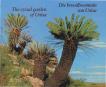
The Cycad Garden of Unisa: Broodboomtuin van Unisa
Keywords:
Botany, Cycads, Gardening, Hobbies, floraSynopsis
ISBN O 86981 029 4
Contents
Foreword (v)
Encephalartos 1; Common names 1; General description 4
Species with subterranean or partially subterranean stems 6
Species with aerial stems 10
Species with revolute leaf margins 10
Species with narrow green to blue-green leaves 10
Species with broad dark-green leaves 14
Species with broad blue-green leaves 20
Other plants in the cycad garden 24
Adenia 24
Aloe boylei 26; -cooperi 28; -ecklonis 30;
- hlangapies 30; -thompsoniae 32; -verecunda 34
Alsophila dregei (Cyathea dregei) 36
Cussonia paniculata 38; - spicata 40
Dais cotinifolia 42
Ekebergia capensis 44
Ensete ventricosum 46
Erythrina acanthocarpa 48; -humeana 48;
- lysistemon 50; -zeyheri 52
Gloriosa superba 54
Haemanthus (Amaryllidaceae) 54
Kniphofia 58
Leonotus leonorus 58
Nymphaea 60
Podocarpus 62
Schyzostylis coccinea 64
Strelitzia reginae 66; - juncea 68
Veltheimia viridifolia 70
Virgilia oroboides 70
Zantedeschia 72
Index to common names 76
Index to botanical names 77
lnhoud
Voorwoord (v)
Encephalartos 1; Volksname 1; Algemene beskrywing 4
Soorte met ondergrondse of gedeeltel i k ondergrondse stamme 6
Soorte met bogrondse stamme 10
Soort met teruggerolde blaarrande 10
Soorte met smal, groen tot blougroen blare 10
Soorte met bree, donkergroen blare 14
Soorte met bree, blougroen blare 20
Ander plante in die broodboomtuin 24
Adenia 24
Aloe boylei 26; -cooperi 28;
-ecklonis 30;
- h/angapies 30; -thompsoniae 32; -verecunda 34
Alsophila dregei (Cyathea dregei) 36
Cussonia paniculata 38; -spicata 40
Dais cotinifo/ia 42
Ekebergia capensis 44
Ensete ventricosum 46
Erythrina acanthocarpa 48; -humeana 48;
-lysistemon 50; - zeyheri 52
Gloriosa superba 54
Haemanthus (Amaryllidaceae) 54
Kniphofia 58
Leonotus leonorus 58
Nymphaea 60
Podocarpus 62
Schizostylis coccinea 64
Strelitzia reginae 66; - juncea 68
Veltheimia viridifolia 70
Virgilia oroboides 70
Zantedeschia 72
Bladwyser vir volksname 76
Bladwyser vir botaniese name 77
Foreword
During the Green Heritage Campaign of 1973, the Unisa Campus Planning Committee decided to establish a garden of numerous indigenous plants from the rich flora of South Africa. With the centenary celebrations of the University of South Africa, the desire for the preservation of this flora came increasingly to the fore. As very few plants are so slow with regard to growth, maturation and
distribution, and therefore so valuable and worth preserving as the Encephalartos species, the decision was taken to establish a cycad garden. The cycad garden of Unisa offers the visitor a unique opportunity to study together the twenty-eight cycad species of South Africa, growing amongst other indigenous trees, shrubs and bulbous plants. With this publication, in which all the labelled plants in the garden
are briefly described, together with their characteristics regarding origin, growth and distribution, we want to inform the nature lover of the pleasure he will derive from the cycad garden which will broaden
and enrich his knowledge of these plants. My sincere thanks to members of the Department of General Botany of the University of Pretoria for their advice and assistance in the compilation of this publication, and to the Institute of Botanical Research for the colour plates that they placed at our disposal.
Voorwoord
Die Terreinbeplanningskomitee van Unisa het gedurende die veldtog Groen Erfenis van 1973 besluit om uit die ryk skat van Suid-Afrika se flora- ryk aan skoonheid en verskeidenheid- 'n aantal pl ante in 'n
besondere inheemse tuin te versamel. Met die Universiteit van Suid-Afrika se eeufeesviering het die
gedagte van bewaring vir di e nageslag al hoe meer op die voorgrond getree. Aangesien min ander vorms van plantlewe so stadig is ten opsigte van groeikrag, rypwording en distribusie en derhalwe so kosbaar en bewarenswaardig soos die Encephalartos-spesies is, is daar besluit om 'n broodboomtuin aan te le. Die broodboomtuin van Unisa bied die besoeker 'n unieke geleentheid om die 28 broodboomsoorte van Suid-Afrika bymekaar te sien waar hulle tussen ander inheemse borne, struike en bolplante groei.
Met hierdie publikasie, waarin al die geetiketteerde plante in die tuin kortliks beskrywe en interessanthede omtrent hul groei, herkoms en verspreiding vermeld word, wil ons die natuurliefhebber in staat stel om die genot wat hy uit die broodboomtuin sal put, te verdiep en homself te verryk met kennis van die plante. My opregte dank aan lede van die Departement Algemene Plantkunde van die Universiteit van Pretoria vir raad en hulp met die samestelling van hierdie publikasie en die lnstituut vir Plantkundige Navorsing vir die beskikbaarstelling van enkele kleurplate.